Walk through
the fire.
Carry the blessing home.
A night of fire, prayer, and purification on a Kyoto mountain.
Once a year, Kyoto’s mountain ascetics light a great fire and call the deity Fudō Myōō into the flames — then invite you to cross the embers barefoot, washing away half a year of misfortune.
- Date
- Saturday, July 25, 2026
- Time
- 17:00–20:30 (Fire-walking from 19:00)
- Place
- Tanukidani-san Fudō-in
Kyoto’s summer rite of purification.
Hiwatari is the temple’s Nagoshi no Harae — the midsummer purification. At the halfway point of the year it washes away the defilements of the months behind you, and prays for health and prosperity in the months ahead.
Purification rites like this usually belong to Shinto shrines — to hold one at a Buddhist temple is rare. It is part of what makes Tanukidani-san unlike anywhere else.
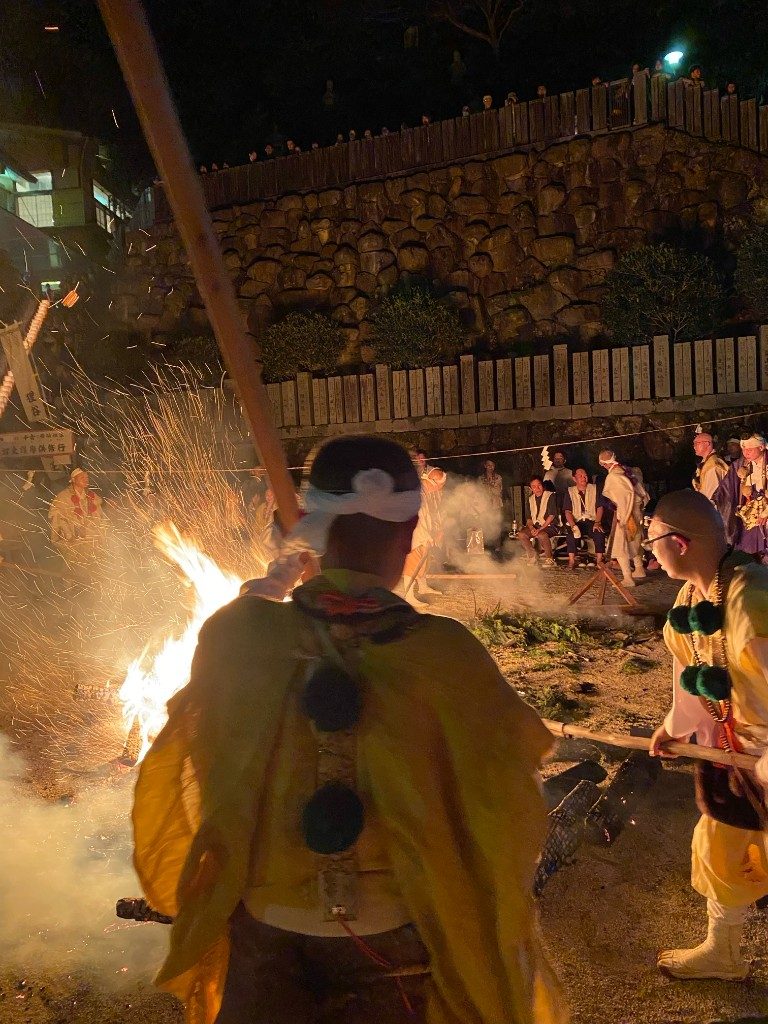
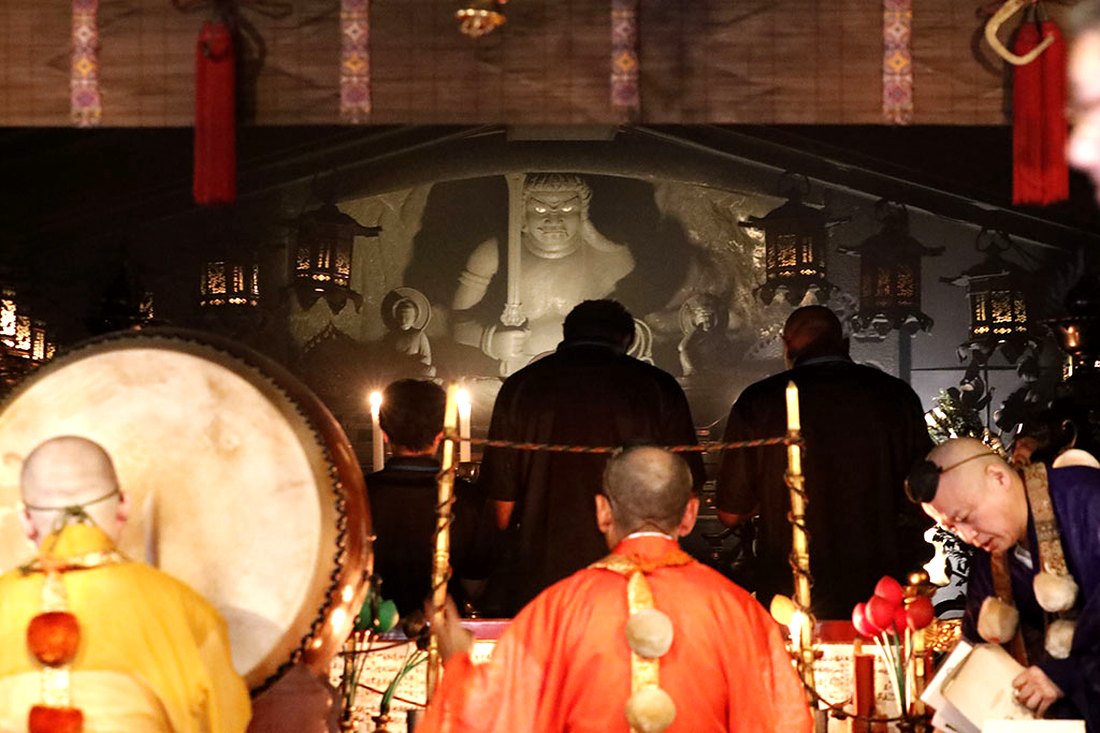
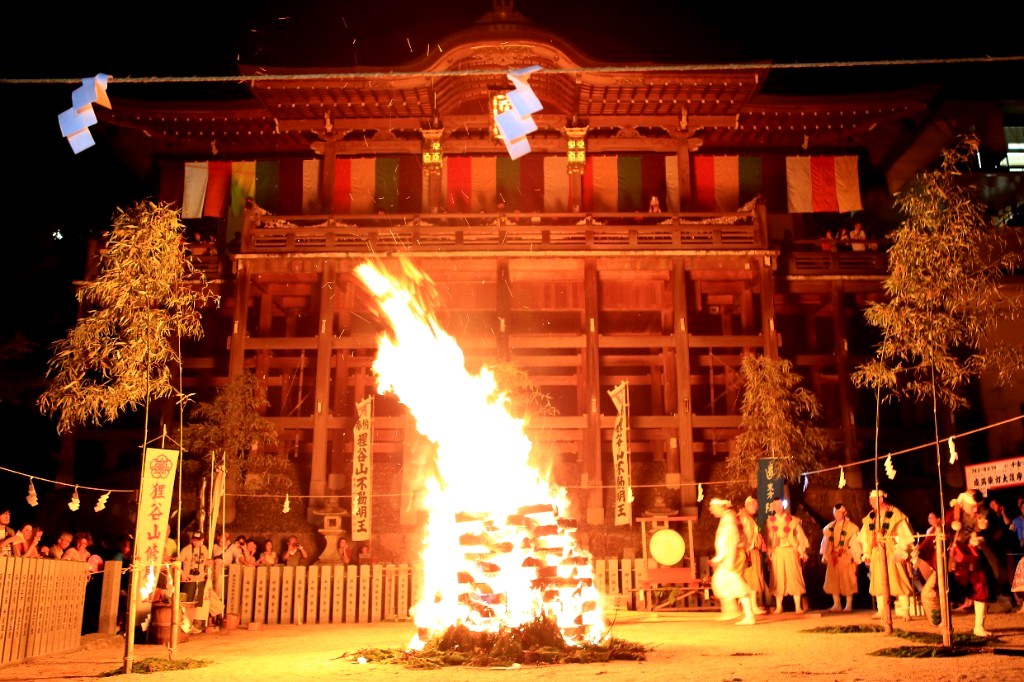
At its heart is the goma — a fire rite of Shugendō, the way of Japan’s mountain ascetics. Following a precise sequence of prayers, the yamabushi purify the ground and kindle a great fire, then call the deity Fudō Myōō down into the flames.
Into that sacred fire, slender gomagi prayer sticks — each carrying a written wish — are offered up. As the smoke rises, so too do the prayers, carried to the deity in the hope that they will be fulfilled.
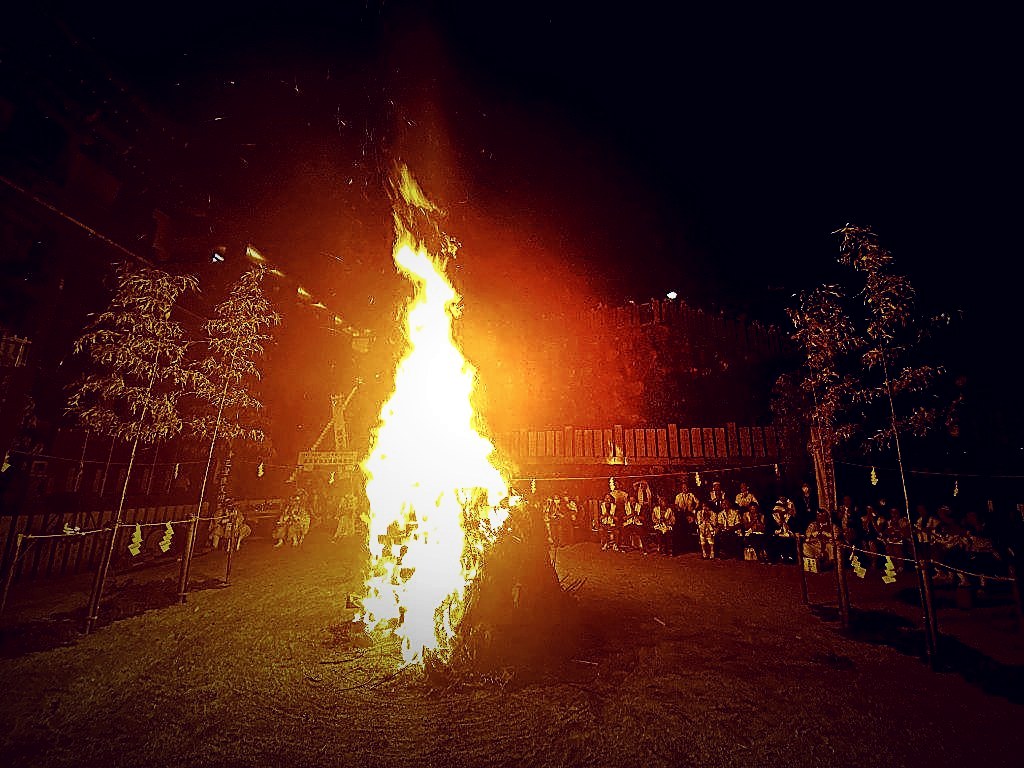
A fire altar two metres square.
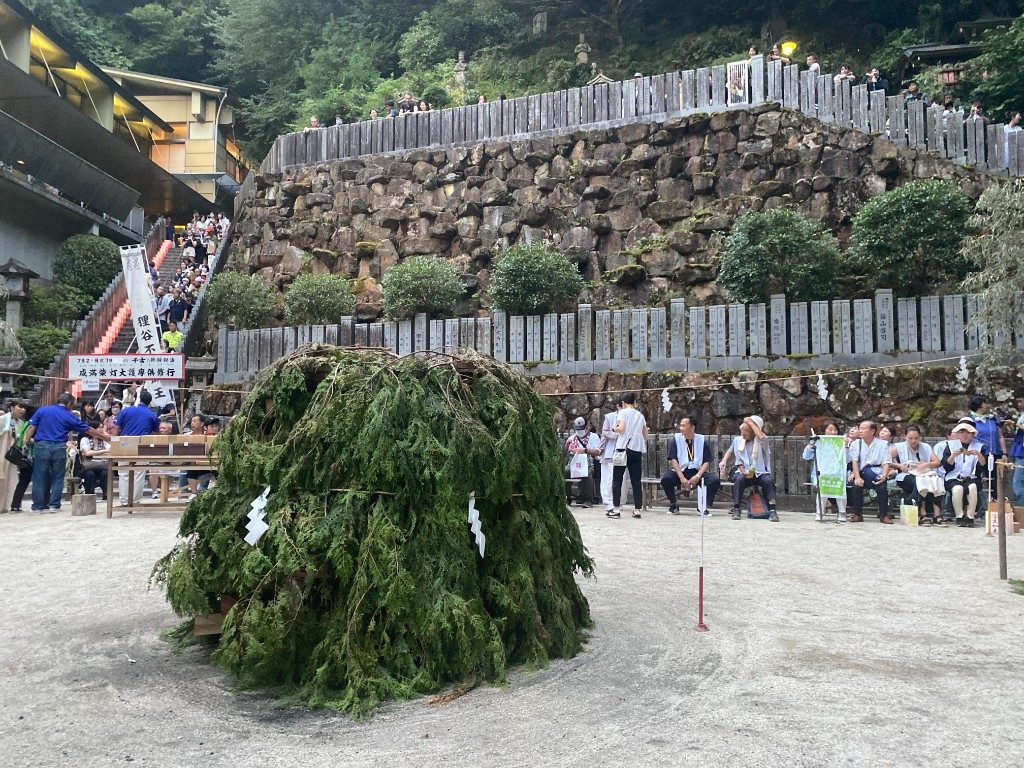
Before it is lit, the single goma altar stands a full two metres square — stacked timber clad in hiba cypress boughs that send up white smoke as they burn.
The yamabushi seal the ground around it with water and arrows loosed to the four directions, drawing the boundary of the sacred fire before the deity is called down into the flames.
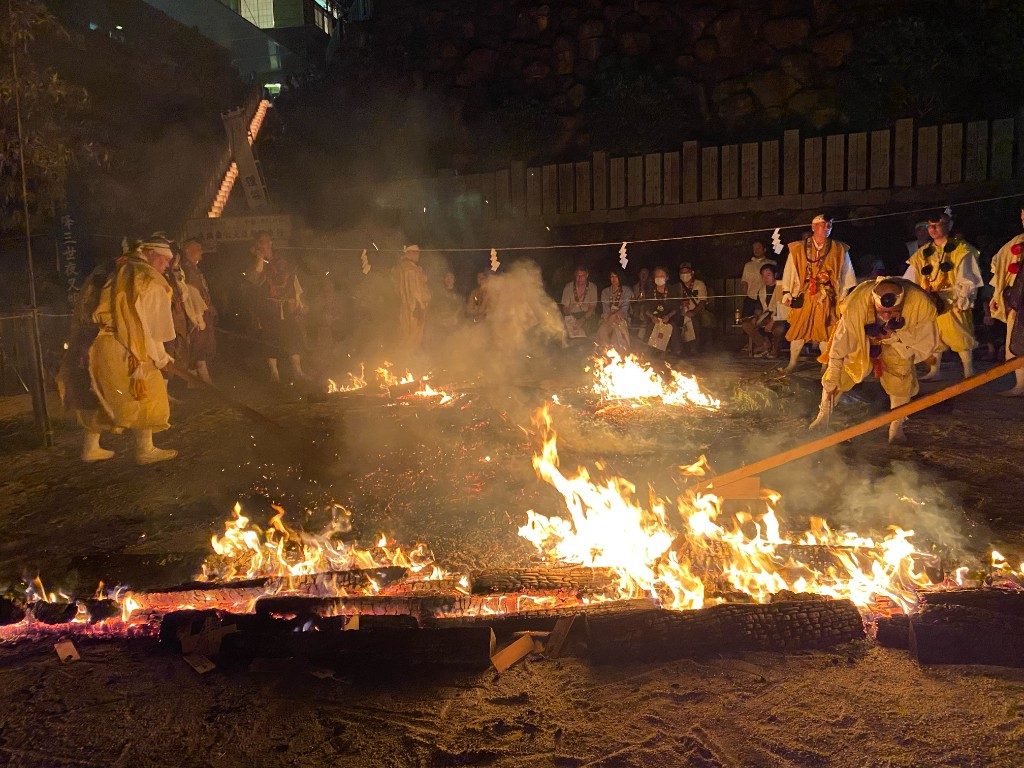
After the prayer, the blessing is yours to receive.
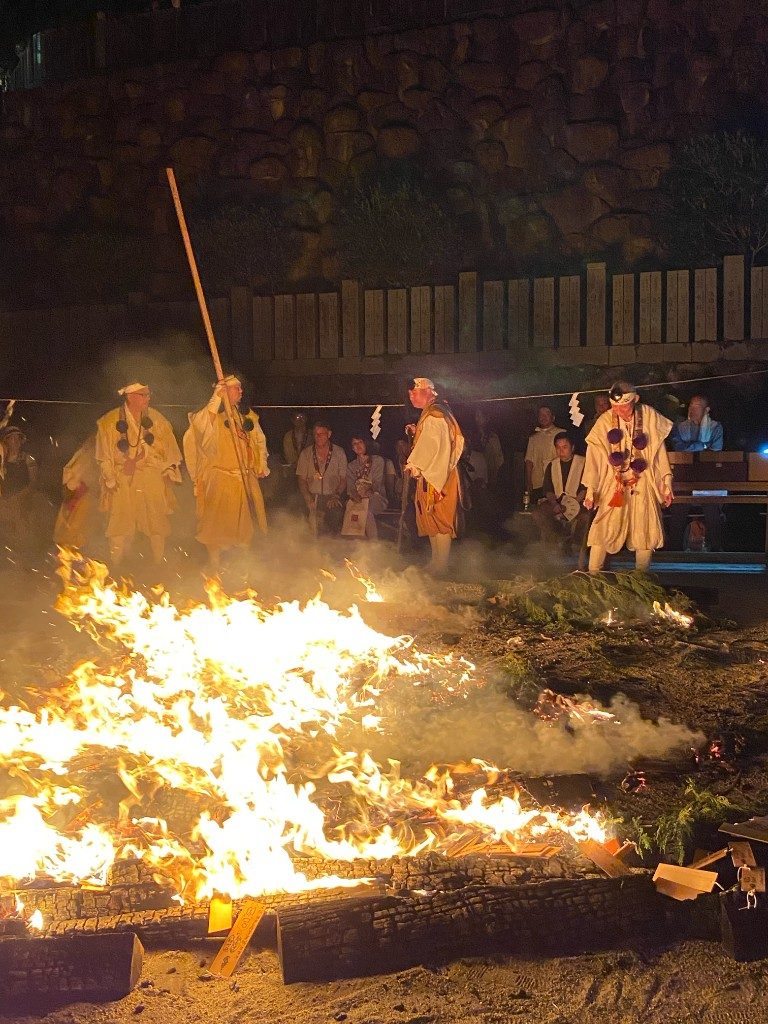
When the prayers are complete, you walk the fire to take the blessing into your own body — to purify mind and spirit, and drive away misfortune. The ascetics call this kashō-zanmai. Once it was a discipline for the yamabushi alone; today it is open to everyone who comes.
Summon your courage and walk between the two walls of blazing fire. To all who cross to the far side, the power of Fudō Myōō shall be granted.
(At Tanukidani-san Fudō-in, the yamabushi carefully subdue the fire bed beforehand, so you walk it in safety.)
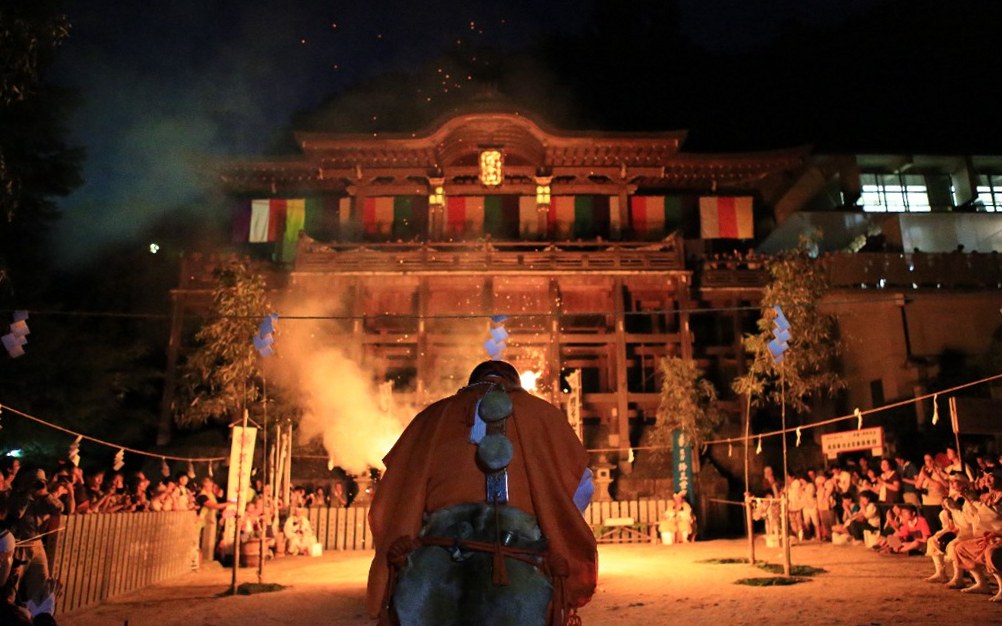
Almost everywhere in Japan, the great fire is lit by day. Here, it has always burned after dark.
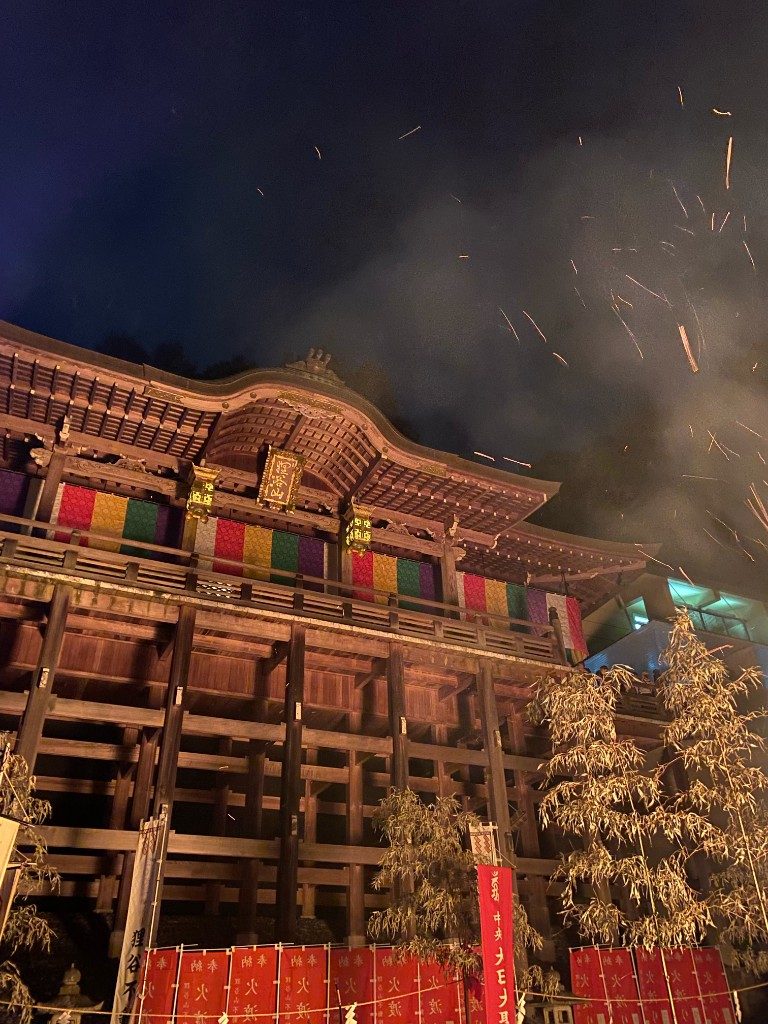
A fire in darkness is another thing entirely — white cypress smoke, sparks against the black mountain, every face lit only by flame.
In seventy years the fire has never once failed to light — unbroken but for the pandemic. Rain may move the hour; it does not stop the rite.
Fudō Myōō is called down into the flames themselves — and then you are invited to walk across the very ground the deity has touched.
From Kyoto city to the sacred embers, guided the whole way
We meet you at the station and stay with you through the night — into rooms most visitors never enter, and to a place at the very front of the crossing.
Meet at Matsugasaki Station, Exit 1
We gather at street level — at the top of the stairs or elevator from Exit 1 of Matsugasaki Station (Kyoto Municipal Subway, Karasuma Line) — and head up to the temple together. No maps, no guesswork, no climbing the mountain alone in the dark.
–17:30
Climb to the temple, guided all the way
From the foot of the mountain we climb up to the temple together — around 250 stone steps — while your guide explains the festival and what awaits you above.
–18:00
Special worship in the inner sanctuary
Behind doors normally closed to visitors, you worship at the inner altar and hear the meaning of the festival explained before it begins.
–18:15
Write your wish · a moment to rest
In the believers’ hall you brush your wish onto a gomagi prayer stick, to be given to the fire later. Time for a restroom break.
–19:00
The goma ritual in the main hall
Inside the hall, the temple declares its intention before the deity and the indoor goma prayers begin — the rite from which the great outdoor fire takes its meaning.
–20:00
Your reserved seat for the Saitō Goma
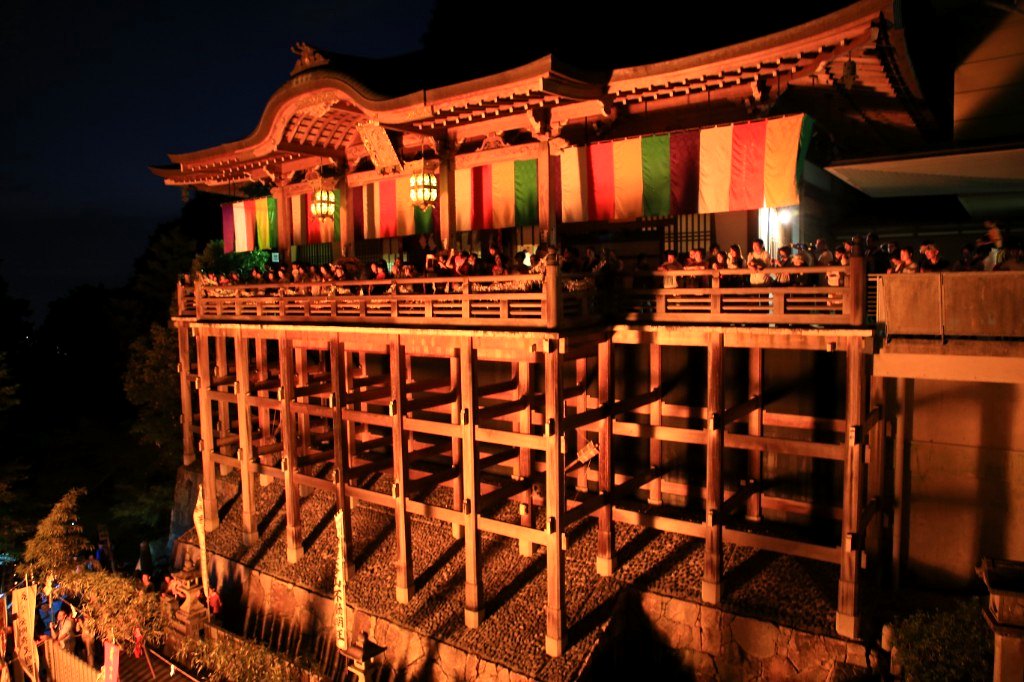
From a reserved place — in the Fire Hall or on the main-hall stage — you watch the great open-air fire: the ground sealed with water and arrows, the white smoke rising into the night.
approx.
Walk the fire among the very first
When the path is ready, you cross — not at the back of a long crowd, but at the head of the line, just behind the ascetics who open the way. The embers are at their freshest, the night at its fullest.
approx.
Back at Matsugasaki Station
Once the rite is over, we head back down the mountain together — with an expected return to Matsugasaki Station around 21:10.
Reserve your Hiwatari-sai evening
Walk the Sacred Fire — Fully Guided
JPY 24,800Everything from the station to the embers: the guided meet-up at 16:30, the inner-sanctuary worship, your gomagi prayer stick, a reserved seat for the Saitō Goma, and your own crossing at the head of the line.
Tanukidani-san Fudō-in — built to be experienced.
From its early days, Tanukidani-san chose to be more than a temple for the local neighborhood. Its founding abbot imagined a place people would climb to, pray in, and remember — a mountain temple you come to not by obligation, but by experience.
So he turned to Shugendō, the way of the mountain ascetics, and took up its two great rites — the fire-walking and the open-air Saitō Goma. Seventy years on, the fire is lit again every summer — now tended by the fourth abbot in the line.
Sakyō-ku, in the wooded hills on the north-east edge of Kyoto. The temple sits at the top of a long mountain stairway — wear comfortable shoes.
Take the Kyoto Municipal Subway Karasuma Line to Matsugasaki — direct from Kyoto Station (approx. 12 min). The tour guide meets you at street level by Exit 1 — at the top of the stairs or elevator.
Barefoot crossing. You walk the embers with bare feet — the path is carefully cooled, though the edges are left hot.
No stockings or long skirts. They can catch — wear trousers you can roll up.
Photography is welcome everywhere except the Fudō Myōō in the main hall.
Rain or shine. Held every year for 70 years — never once cancelled but for the pandemic. Rough weather may move the hour; it never stops the fire.
Fire, prayer, and the mountain night